
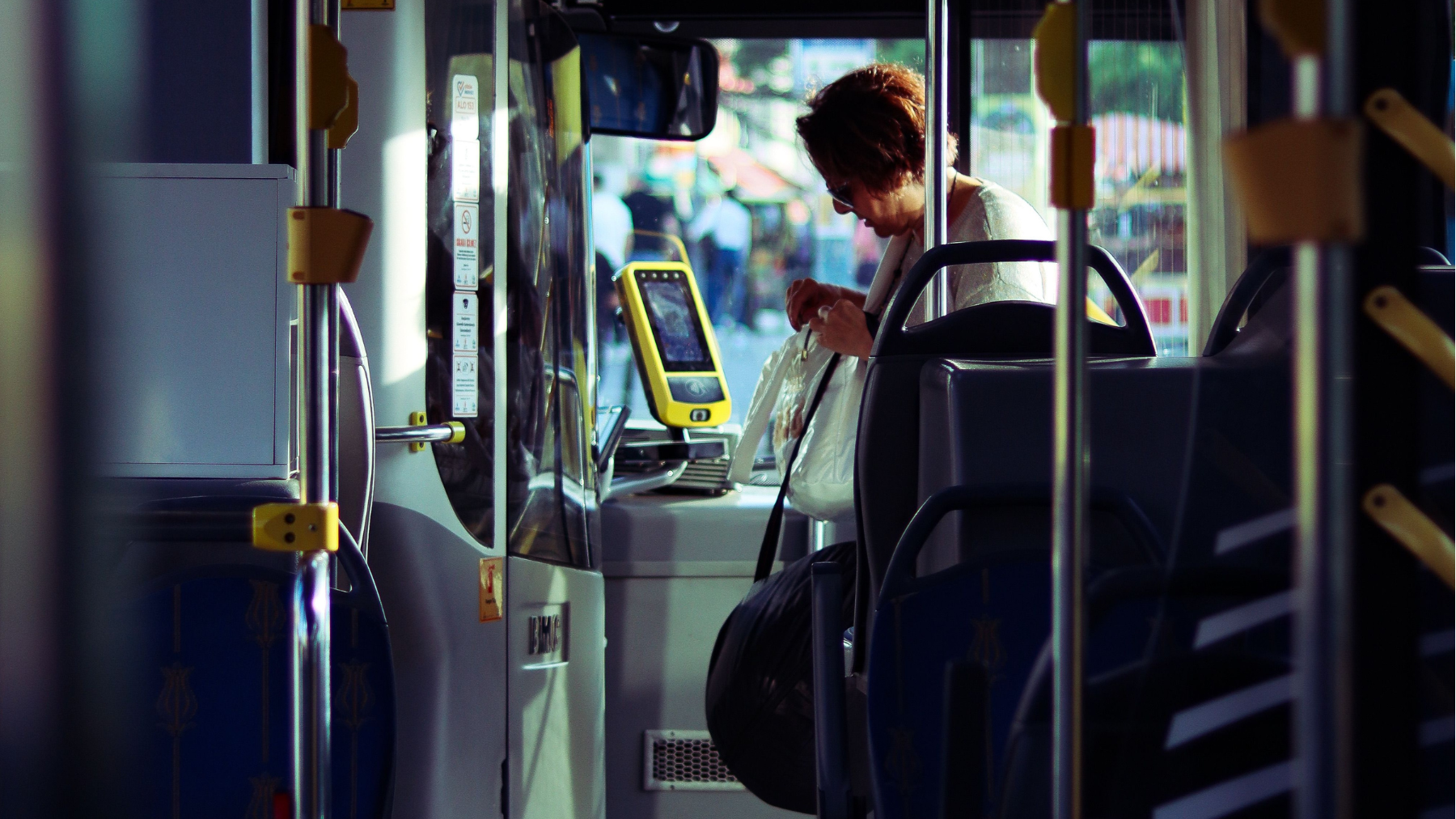
South East Queensland’s 50-cent public transport fares have been a massive hit, pushing network patronage past pre-pandemic levels.
But while you might think you're snagging a bargain commute on Brisbane buses, trains, and ferries, glitches in the ticketing system could be quietly draining your bank account.
Between aging go card readers and the rollout of new Smart Ticketing technology, thousands of valid commutes are being incorrectly flagged as incomplete.
Here are the key things you need to know about ticketing glitches, and how to claim your money back.
What is a default fare?
If you fail to tap on at the start of your journey, or fail to tap off at the end, the Translink system does not view this as a glitch.
Instead, it assumes you have broken the ticketing rules and hits you with a "default fare" — a fixed penalty charge.
For standard transit like buses, trams, and trains, this penalty is $2.50. For the privately operated Airtrain, it can be as high as $25.80.
Because the system is designed to penalise fare evasion, it will never automatically alert you that you've been overcharged.
Why am I being charged $5.00 for a 50-cent trip?
The most common way commuters get overcharged on the new Smart Ticketing network comes down to mixing devices.
If you tap on at your station using your Apple Watch or phone, you must tap off using that exact same device.
Even if your physical credit card is linked to the same bank account as the digital wallet on your phone, the card readers register them as two entirely different payment methods.
If you tap on with your phone and tap off with your physical card, the system thinks you took two separate, incomplete journeys. You will be hit with two $2.50 default fares, turning a 50-cent trip into a $5.00 headache.
What is a 'ghost tap'?
Commuters have reported experiencing "ghost taps" — particularly when rushing off crowded buses.
Legacy card readers process new contactless credit cards slower than old go cards. In the rush to get off a bus, you might tap your phone, hear a beep, and step off, assuming it worked.
But because of hardware lag, the machine might display a red 'X' after you've already walked away, resulting in a $2.50 default fare for failing to tap off.
Can I just tap my whole wallet?
No. This causes an issue known as "card clash."
If you keep your legacy go card in your phone case or physical wallet right next to your credit card, the new Smart Ticketing validators will get confused.
When you tap your wallet to the reader, it might scan your credit card when you get on, and your go card when you get off. Both accounts will then be hit with a $2.50 default fare.
Why is there a 10-cent charge on my bank statement?
If you pay with a credit or debit card, you might see a 10-cent (or $0) pending charge appear immediately.
This is just a temporary hold to check if your card is active. Your actual travel fares are added up and charged at the end of the day, and the 10-cent hold usually disappears within a few days.
However, this delayed billing makes it incredibly difficult for commuters to know exactly what they were charged for a specific trip without checking official portals days later.
How do I get my money back?
If you make a mistake or the system glitches, getting your money back through official channels requires some manual heavy lifting.
To use the official Translink Ticketing Assistant or the go card portal, you have to manually scroll through your travel history, hunt for the $2.50 errors yourself, and type out an explanation for every single trip failure to request a refund.
This process has been criticised for placing an unfair administrative burden on the passenger.
That is why we built FareClaim were built.
Instead of hunting for errors manually, commuters can upload their travel history directly into FareClaim. The web app's algorithm instantly scans the data, finds the hidden default fares, ghost taps, and missed transfers, and uses AI to generate the exact evidence you need to submit a successful refund claim.
Is this a bigger issue?
The technical shortcomings of the ticketing network have become a legislative concern.
During discussions surrounding the Transport Affordability Amendment Bill 2026, commuter advocates presented evidence to the Queensland Parliament arguing that these default fares act as a "hidden tax" on vulnerable commuters.
While the state is heavily subsidising the 50-cent fare to relieve cost-of-living pressures, millions of dollars are potentially being absorbed back by the state through unfair penalty fares and complicated refund processes.
Works Cited
- Translink, Default fares, https://translink.com.au/tickets-and-fares/fares-and-zones/fixed-fare
- Translink, How to use contactless payments, https://translink.com.au/tickets-and-fares/contactless-payments/how-to-use-contactless-payments
- Translink, Contactless payment support, https://translink.com.au/tickets-and-fares/contactless-payments/contactless-payment-support
- Queensland Parliament, Transport Affordability Amendment Bill 2026 - Submissions (039), https://documents.parliament.qld.gov.au/com/SDIWC-1AF9/TAAB2026-6E81/submissions/00000039.pdf
- Jason Tan, FareClaim — Find Translink go card overcharges in South East Queensland, https://jpctan.com/fareclaim